Products
Carbon Brick
• Bulk Density: ≥1.55–1.68 g/cm³
• Apparent Porosity: ≤17–20%
• Cold Crushing Strength: ≥30–38 MPa
• Thermal Conductivity at 600°C: 12–25 W/(m·K)
• Available Types: Carbon & Semi-Graphite & Microporous Carbon
• Function: High Thermal Conductivity & Thermal Shock Resistance & Chemical Corrosion Resistance
Product Introduction
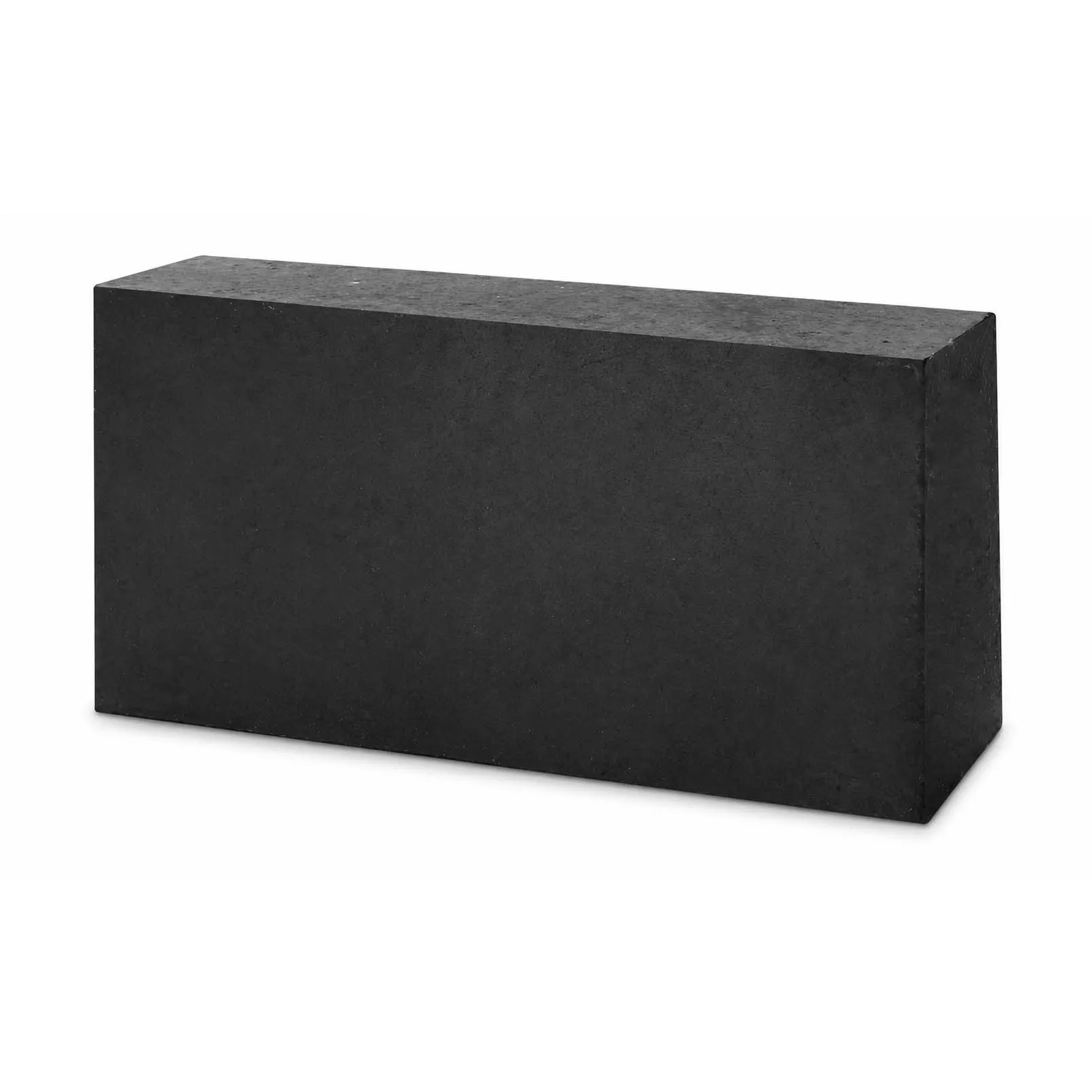
Carbon Brick is a neutral refractory product manufactured from carbonaceous raw materials such as electrically calcined anthracite, metallurgical coke, petroleum coke, pitch coke and graphite.
Carbon-containing organic materials such as coal tar or pitch are commonly used as binders. The prepared materials are mixed, formed under high pressure, baked at high temperature and machined according to the required dimensions.
The carbon-based structure provides good thermal conductivity, low thermal expansion and resistance to rapid temperature changes. Carbon Brick also provides resistance to many acids, alkalis, salts and organic solvents under suitable operating conditions.
According to the raw-material composition and graphite content, available products can include common carbon brick, semi-graphite carbon brick, artificial graphite brick, microporous carbon brick and ultra-microporous carbon brick. Different grades can be selected according to furnace position, molten-iron penetration risk, thermal conductivity and mechanical strength requirements.
Feature:
- High thermal conductivity.
- Low thermal expansion.
- Good thermal shock resistance.
- Good high-temperature stability.
- Good resistance to molten iron penetration.
- Good chemical corrosion resistance.
- Good resistance to acids and alkalis.
- Good resistance to salts and organic solvents.
- High mechanical strength.
- Low air permeability in microporous grades.
- Dense refractory structure.
- Customized sizes and grades available.
Microporous and ultra-microporous grades have lower air permeability than conventional carbon bricks, helping reduce penetration by molten iron and corrosive furnace media. High-conductivity grades transfer heat more effectively to the furnace cooling system and can support the formation of a protective frozen layer under appropriate blast-furnace operating conditions.
Application:
Carbon Brick is mainly used in high-temperature industrial equipment requiring thermal conductivity, chemical stability and resistance to molten materials.
Typical applications include:
- Blast furnace bottoms
- Blast furnace hearths
- Blast furnace bosh linings
- Blast furnace launders
- Blast furnace tap-hole areas
- Aluminum reduction cells
- Aluminum electrolytic cells
- Ferroalloy furnaces
- Calcium carbide furnaces
- Industrial electric furnaces
- Iron and steel ladles
- Pickling tanks
- Electroplating tanks
- Chemical reaction tanks
- Chemical storage tanks
- Pulp and paper dissolving tanks
- Petrochemical autoclaves
- Other chemical-corrosion-resistant linings
Carbon bricks are especially common in blast-furnace bottoms and hearths. Semi-graphite and microporous grades may be selected for different positions according to heat transfer, penetration resistance and furnace-lining design.
Technical Data:
| Item | High Thermal Conductivity Carbon Brick | Semi-Graphite Carbon Brick | Microporous Carbon Brick | Ultra-Microporous Carbon Brick |
|---|---|---|---|---|
| Ash Content (%) ≤ | 7 | 10 | 20 | 23 |
| Bulk Density (g/cm³) ≥ | 1.60 | 1.55 | 1.62 | 1.68 |
| Apparent Porosity (%) ≤ | 18 | 20 | 18 | 17 |
| Cold Crushing Strength (MPa) ≥ | 30 | 30 | 36 | 38 |
| Modulus of Rupture (MPa) ≥ | 8 | 8 | 9 | 9 |
| Molten Iron Corrosion Index (%) ≤ | 32 | 32 | 30 | 30 |
| Oxidation Rate (%) ≤ | 20 | 20 | 28 | 8 |
| Air Permeability (mDa) ≤ | 70 | 50 | 9 | 1 |
| Thermal Conductivity at Room Temperature W/(m·K) | 20 | 6 | 7 | — |
| Thermal Conductivity at 300°C W/(m·K) | — | 9 | 10 | 16 |
| Thermal Conductivity at 600°C W/(m·K) | 25 | 12 | 14 | 20 |
The technical values above are based on the reference manufacturer’s published carbon-brick table. Different manufacturers may use different raw materials, pore-control systems, graphite contents and testing methods, so these values should be treated as reference data rather than Jiuhua’s guaranteed specifications.