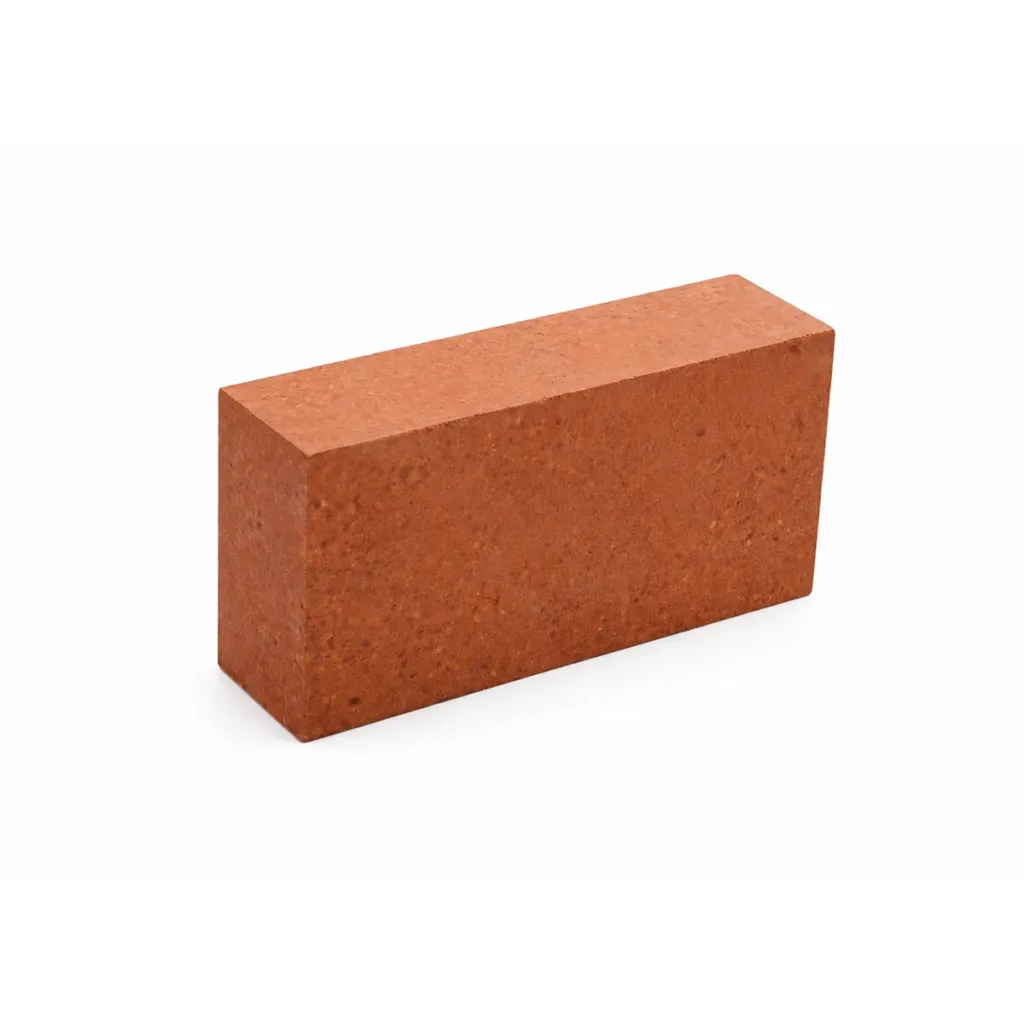
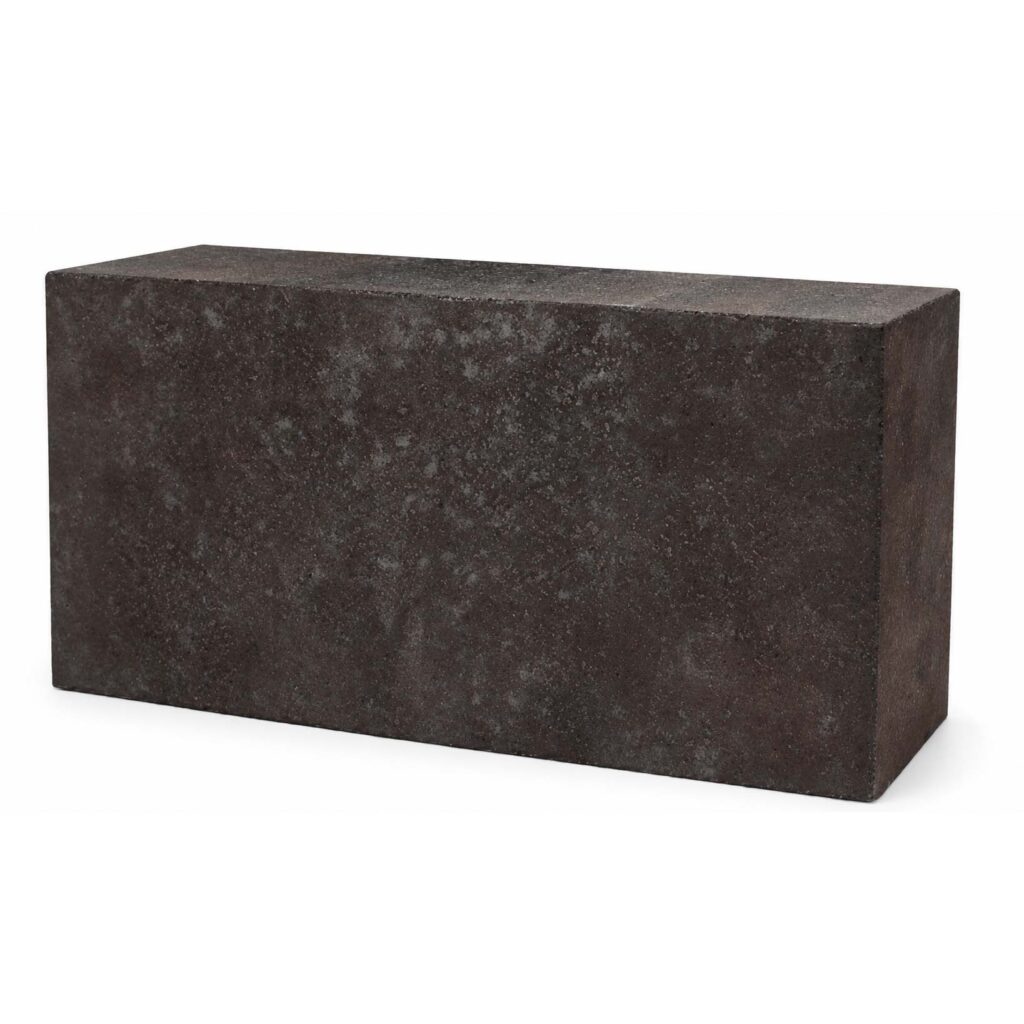
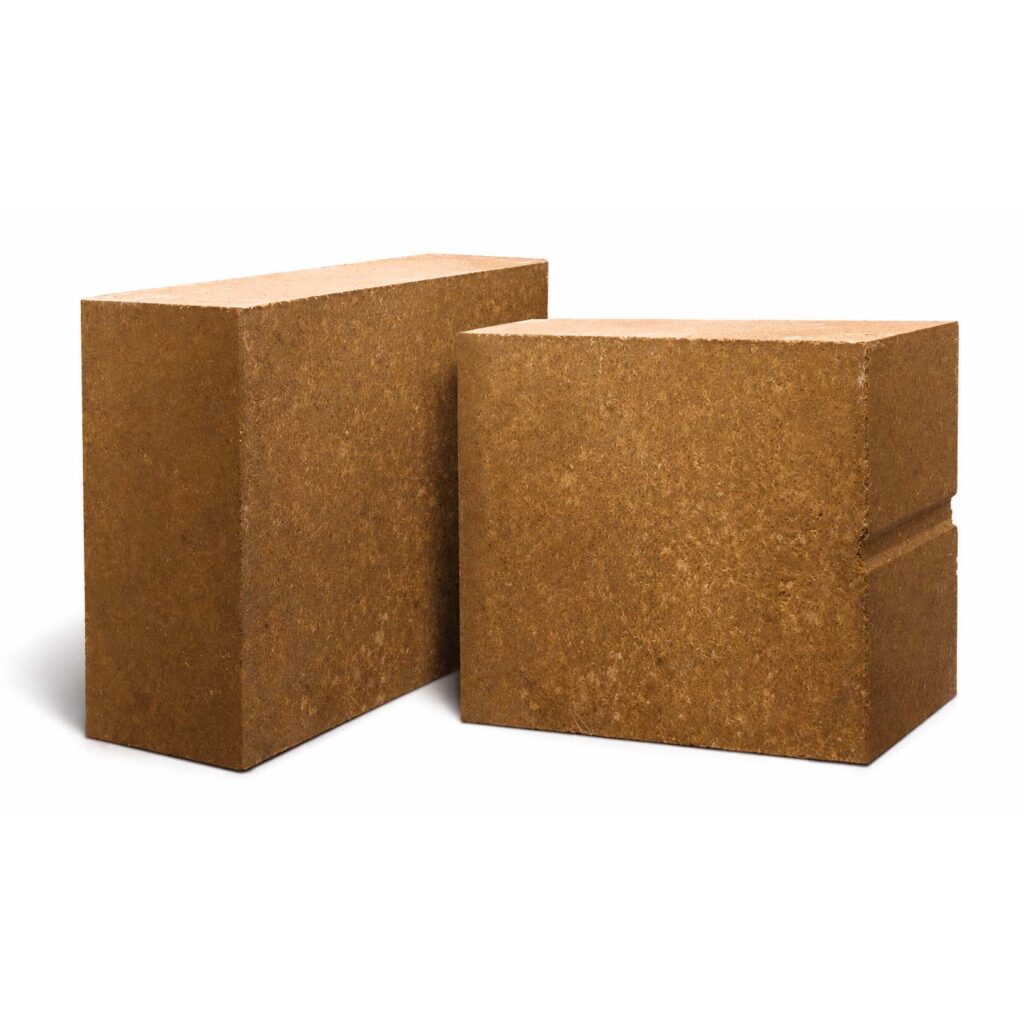
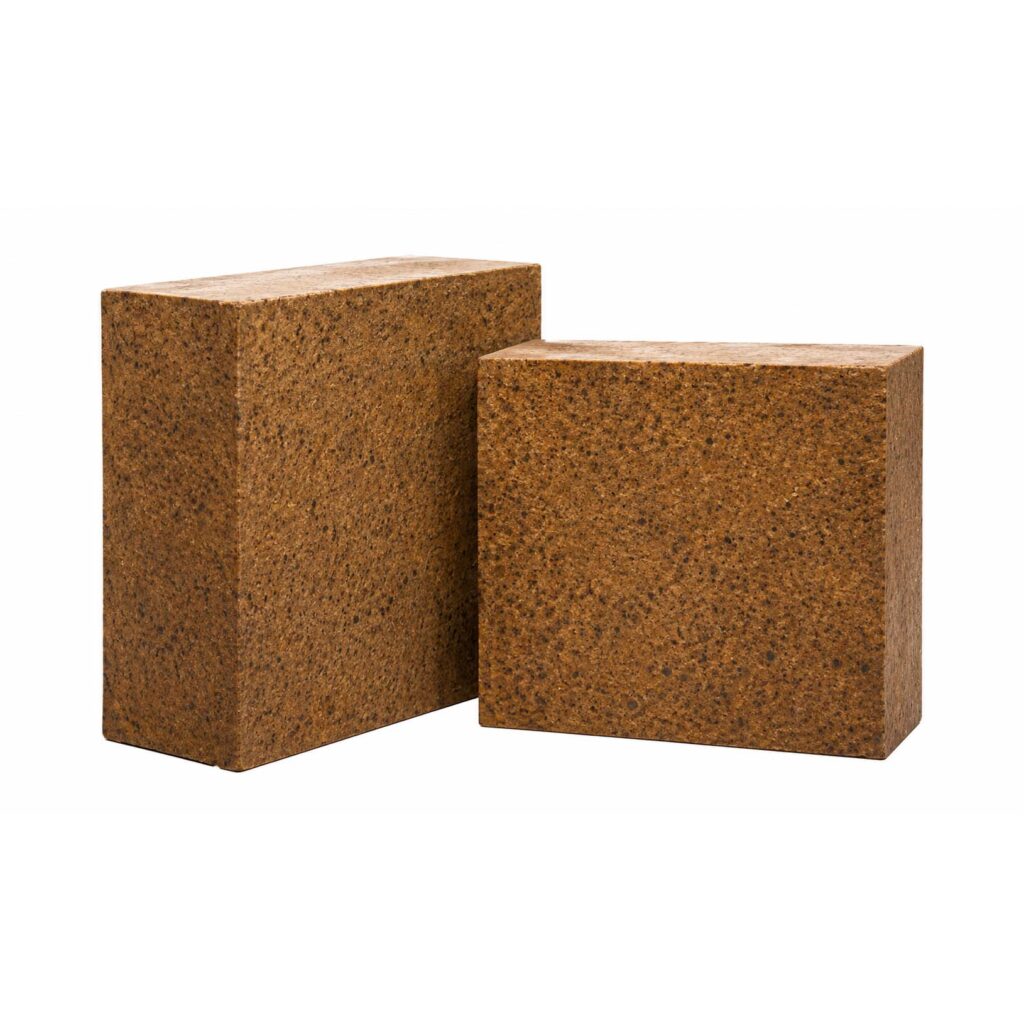
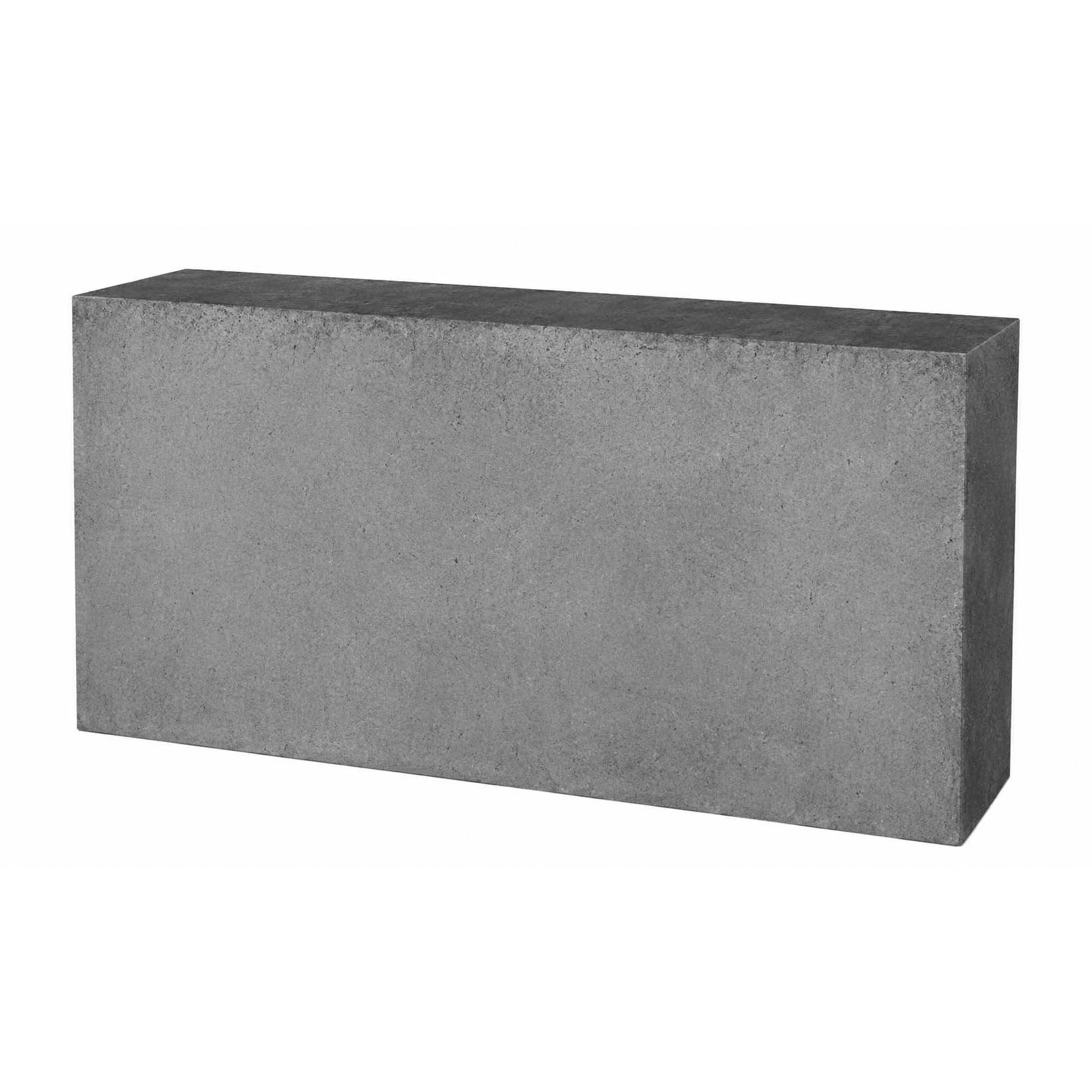
Magnesia Carbon Brick is a basic refractory brick manufactured from high-purity magnesia, graphite and selected carbon-bonding materials such as resin or pitch.
During production, the raw materials are accurately proportioned, hot-mixed and formed under high pressure. Depending on the manufacturing process and product requirements, the shaped bricks may be heat-treated at approximately 300°C or fired at a higher temperature.
The magnesia component provides strong resistance to basic slag and high-temperature corrosion. The carbon component provides high thermal conductivity, low thermal expansion and good resistance to thermal spalling.
This composite structure helps compensate for the relatively poor thermal shock resistance of conventional magnesia refractory materials. Magnesia Carbon Brick provides good slag resistance, low slag penetration, high-temperature stability and reliable performance under severe steelmaking conditions.
Different grades are available with carbon contents ranging from 5% to 18%. Lower-carbon grades generally provide higher MgO content and greater bulk density, while higher-carbon grades provide improved thermal shock resistance and lower thermal expansion.
Feature:
- High MgO content.
- Adjustable carbon content.
- Good resistance to basic slag.
- Good resistance to slag penetration.
- High thermal conductivity.
- Low thermal expansion.
- Good thermal shock resistance.
- Good resistance to thermal spalling.
- Low apparent porosity.
- Good high-temperature stability.
- Good resistance to rapid temperature changes.
- Suitable for severe steelmaking environments.
- Strong carbon-bonded refractory structure.
- Different carbon grades available.
The combination of slag-resistant magnesia and thermally conductive, low-expansion carbon is the principal reason for the brick’s corrosion resistance and thermal shock performance.
Application:
Magnesia Carbon Brick is mainly used as a working lining in steelmaking furnaces and vessels exposed to basic slag, molten steel, rapid temperature changes and severe thermal stress.
Typical applications include:
- Basic oxygen converters
- Converter working linings
- Converter tapping holes
- Electric arc furnaces
- High-power electric furnace hot spots
- Electric furnace sidewalls
- Steel refining furnaces
- Ladle slag lines
- Steel ladle working linings
- Ladle impact areas
- Tapping areas
- Other basic steelmaking furnace linings
The reference manufacturer specifically lists steelmaking oxidation converters, converter tapping ports, high-power electric furnace hot spots, refining furnace linings and steel-ladle slag lines as the principal applications.
The appropriate grade should be selected according to furnace type, slag composition, operating temperature, oxidation conditions, thermal cycling frequency and required campaign life.